Pets

Not a Louse - Variant of Louse
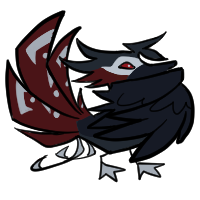
Don't let its clever disguise fool you, this is clearly not a louse.
Pterabyte
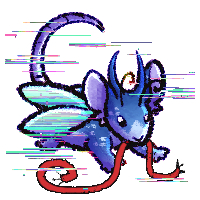
Given out as a gift for large site updates that last over 24 hours + major bugs.
A non-biological creature that simply appeared on Port Borealis one day. They have a penchant for chewing important cables.

Louse
Don't let its clever disguise fool you, this is clearly not a louse.

This Louse is ready for the Halloween season!
Halloween Louse - Variant of Louse
This Louse is ready for the Halloween season!
Galonimbus (Spring)
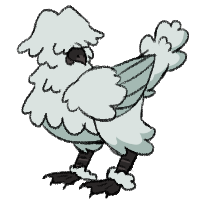
These chickens live in wetlands and marshes and have adapted to their habitats. Their feathers are incredibly dense and are hydrophobic to keep themselves and their nests dry and warm. They have been seen using their tails to scoop mud for habitat creation, as well as an umbrella of sorts for their chicks.
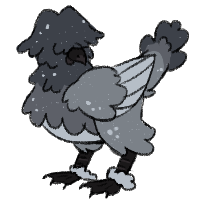
These chickens live in wetlands and marshes and have adapted to their habitats. Their feathers are incredibly dense and are hydrophobic to keep themselves and their nests dry and warm. They have been seen using their tails to scoop mud for habitat creation, as well as an umbrella of sorts for their chicks.
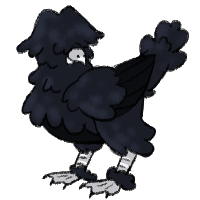
These chickens live in wetlands and marshes and have adapted to their habitats. Their feathers are incredibly dense and are hydrophobic to keep themselves and their nests dry and warm. They have been seen using their tails to scoop mud for habitat creation, as well as an umbrella of sorts for their chicks.
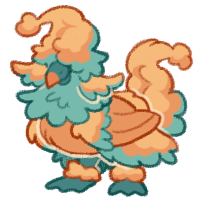

Petalpillar (Spring)
The genetics of Petalpillars are oddly malleable to their environments. They grow attached to one flower or plant from birth and carry it with them everywhere, even with them to their cocoons. When they hatch, their genes seem to fuse with their flower!

Lillies are a common choice for wild Petalpillars. Lilies make for good napping and hiding areas as babies, and Lilyflies easily signal to predators that they are highly toxic and don't make for a good snack.

Poppies are a common choice for Petalpillars living in areas populated by residents. They tend to reside in gardens, but generally aren't considered pests. They're good at keeping soil healthy at the cost of one flower, and great pollinators when they grow up.

Spring blossoms aren't common choices for Petalpillars on their own, but some pet owners will give them to baby Petalpillars to give them a pretty look when they grow up. Blossomflies are delicate and can only live as pets.
Lilyfly - Variant of Petalpillar (Spring)
Lillies are a common choice for wild Petalpillars. Lilies make for good napping and hiding areas as babies, and Lilyflies easily signal to predators that they are highly toxic and don't make for a good snack.
Poppyfly - Variant of Petalpillar (Spring)
Poppies are a common choice for Petalpillars living in areas populated by residents. They tend to reside in gardens, but generally aren't considered pests. They're good at keeping soil healthy at the cost of one flower, and great pollinators when they grow up.
Blossomfly - Variant of Petalpillar (Spring)
Spring blossoms aren't common choices for Petalpillars on their own, but some pet owners will give them to baby Petalpillars to give them a pretty look when they grow up. Blossomflies are delicate and can only live as pets.

Lavendeer (Spring)
Lavendeer are shy yet curious little creatures, often found frolicking in flower fields. They're sensitive to their environment and will naturally take on the appearance of the flowers around them. The lavender variant was the first to be discovered, hence their name.

Lavendeer are shy yet curious little creatures, often found frolicking in flower fields. They're sensitive to their environment and will naturally take on the appearance of the flowers around them. The lavender variant was the first to be discovered, hence their name.
Wildflower Lavendeer - Variant of Lavendeer (Spring)
Lavendeer are shy yet curious little creatures, often found frolicking in flower fields. They're sensitive to their environment and will naturally take on the appearance of the flowers around them. The lavender variant was the first to be discovered, hence their name.

Albino Fantailed Duck - Variant of Fantailed Duck (Spring)
While rare, albino fantailed ducks can sometimes be spotted among wild flocks.

Azure Fantailed Duck - Variant of Fantailed Duck (Spring)
A specially bred color variant, not found in the wild. They bond well with their owners, although they tend to have more of an attitude compared to their common counterparts.

Wally - Variant of Oveeja (Spring)
These varients of Oveeja do not leave the hive, so they aren't seen often. They work to help craft the hive with their long and strong front legs.
Gray Galonimbus - Variant of Galonimbus (Spring)
These chickens live in wetlands and marshes and have adapted to their habitats. Their feathers are incredibly dense and are hydrophobic to keep themselves and their nests dry and warm. They have been seen using their tails to scoop mud for habitat creation, as well as an umbrella of sorts for their chicks.

Fantailed Duck (Spring)
These fancy waterfowl are common residents of parks and lakes. They are fairly easy to keep as pets if you have a large garden with a pond; more coloful varieties are especially sought-after for their striking appearance.
A specially bred color variant, not found in the wild. They bond well with their owners, although they tend to have more of an attitude compared to their common counterparts.
While rare, albino fantailed ducks can sometimes be spotted among wild flocks.